Career Management Software
Talent matching
[
3/11/25
]
How AlumnForce Designed a Fair, Multi-Criteria Job Matching Engine
Introduction
AlumnForce is a platform that helps schools and universities build strong alumni communities. A key part of that mission is enabling graduates to discover relevant career opportunities, and for institutions to track and support job placements.
To do this effectively, AlumnForce needed an intelligent way to match alumni with job offers. But it couldn’t be just any algorithm. It had to respect ethical constraints, avoid bias, and offer transparency around how decisions were made.
With Rakam, AlumnForce co-developed a custom AI matching system designed to align with professional values, education goals, and new regulatory expectations.
The Challenge
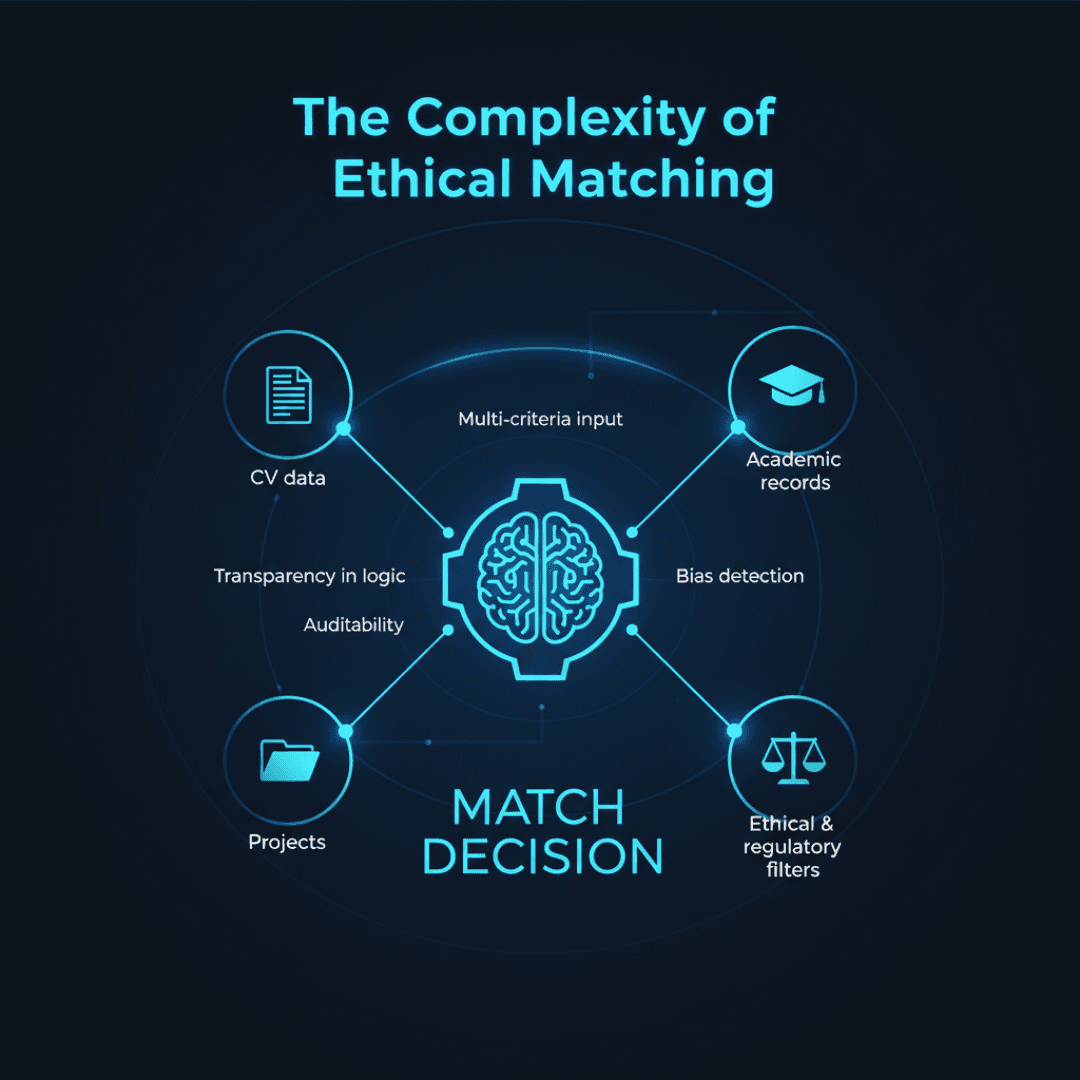
AlumnForce’s users bring diverse paths: different degrees, professional experiences, side projects, and goals. Matching them to jobs isn’t just about skills, it requires nuanced logic and ethical sensitivity.
Key challenges included:
Creating personalized matches from a wide range of alumni profiles
Incorporating non-discriminatory, transparent selection criteria
Ensuring results could be audited and explained if challenged
Adapting to multi-criteria inputs, from CVs to academic records and project work
"We couldn’t rely on generic AI scoring. Every match needed to make sense, and be able to show why."
The Vision
The goal was not only to help alumni find jobs, but to ensure that the platform could stand behind its recommendations. That meant building a system with ethical principles embedded at every level.
Objectives included:
Analyze structured and unstructured profile data fairly
Enable role-specific matching that reflects real hiring logic
Provide traceable, bias-resistant results
Give institutions visibility into match logic and performance
The Solution
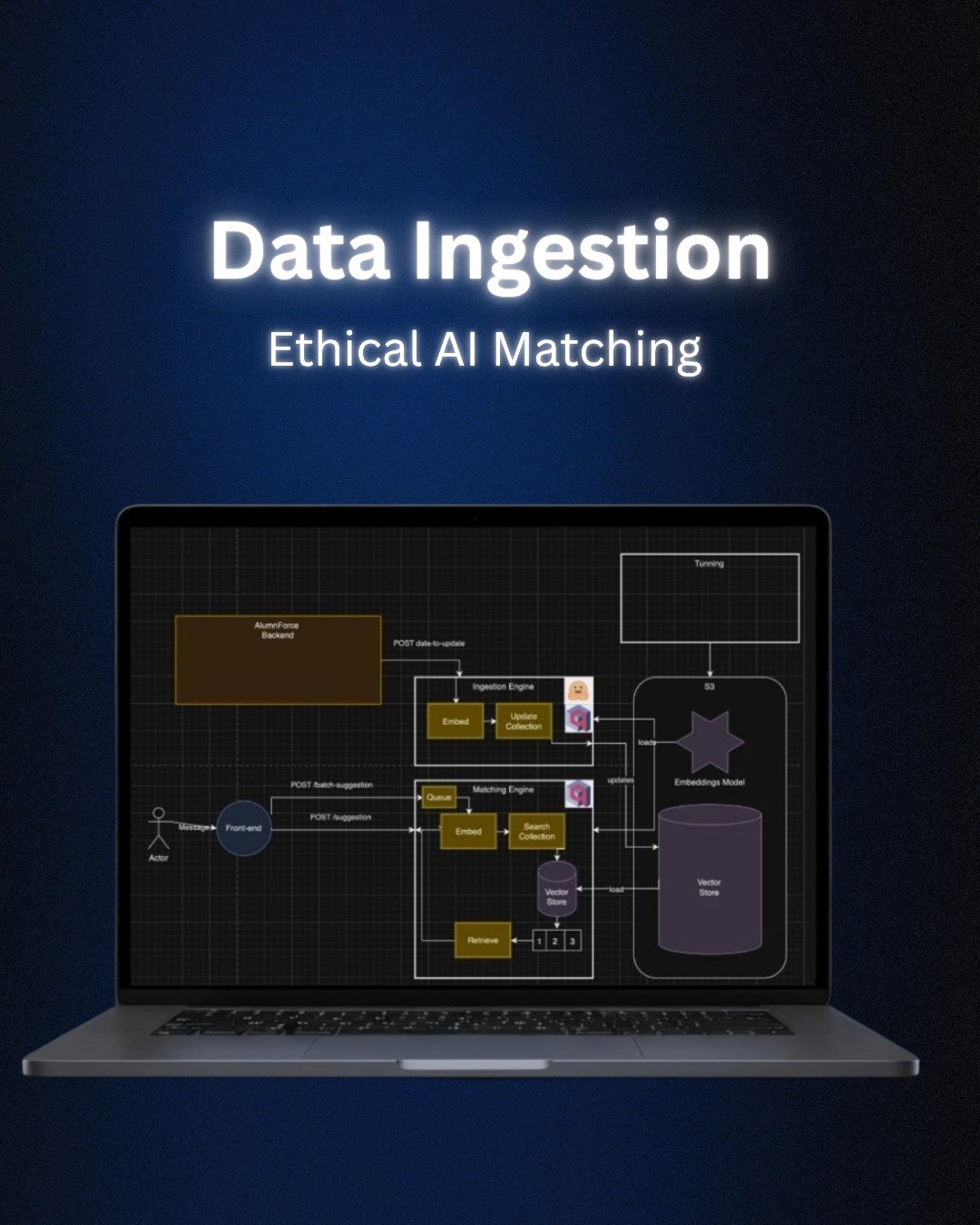
Rakam collaborated with AlumnForce’s technical and product teams to design a matching engine tailored to alumni career paths, one that was customizable, auditable, and grounded in fairness.
1. Multi-Source Profile Matching
The engine reads and synthesizes information from CVs, academic data, and past projects to deliver highly relevant job recommendations.
Supports flexible data types and formats
Considers domain expertise, industry relevance, and role history
Matches evolve with user activity and platform updates
"We needed something that could recognize the full story behind a profile, not just keywords."
2. Custom Matching Logic with Ethical Guardrails
Matching logic is fully configurable to reflect institutional values and industry norms. Institutions can prioritize certain types of experience, balance scoring factors, and flag sensitive criteria.
Includes bias-detection checks and monitoring
Offers transparency around why matches were made or excluded
Can exclude or de-prioritize based on ethical filters (e.g., fairness rules)
"It’s about building trust with both alumni and employers."
3. Built for Ongoing Evaluation and Regulation
As the system scales, it also maintains a clear record of how matches were made.
Match decisions can be reviewed by staff
Logs include reasoning and scoring breakdown
Engine aligns with AI Act classification as a high-risk system
The Outcome
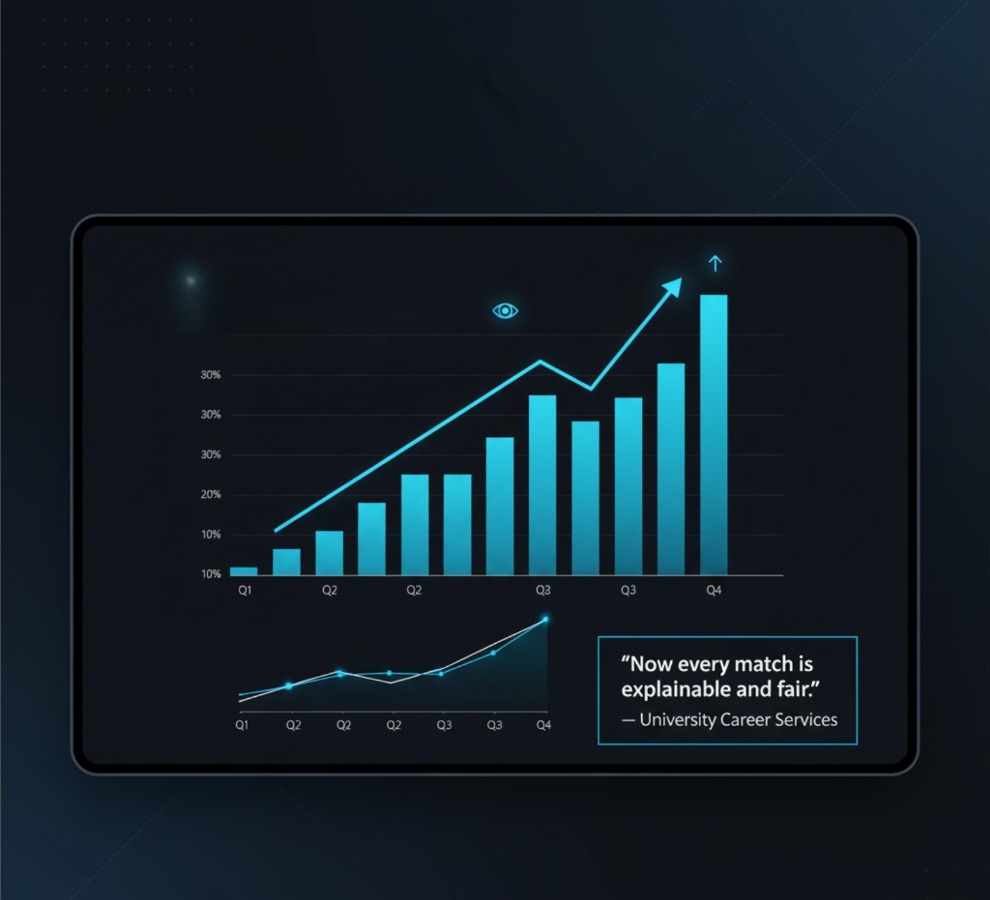
The matching engine allowed AlumnForce to deliver a more responsible, scalable job search experience, while reinforcing the trust institutions and alumni place in the platform.
Alumni now receive tailored, defensible job suggestions
Platform administrators can review, adjust, and explain recommendations
Institutions can demonstrate equity and transparency in alumni career services
"With Rakam, we didn’t just deploy a feature, we deepened the purpose of our platform."
This project helped AlumnForce bridge technology and ethics in a way that serves both users and partners.